Lead Service Lines

Replacing lead pipes with a people-first approach that builds trust, provides transparency, and delivers results.
01
The Challenge
Lead service lines remain one of the most widespread threats to public health in U.S. water infrastructure, especially in low-income and historically underserved communities. Exposure to lead in drinking water can cause irreversible health effects, particularly for children and pregnant women. With the EPA’s Lead and Copper Rule Improvements (LCRI), the stakes are even higher. Utilities must verify all service lines, begin replacing at least 10% of lead and galvanized-requiring replacement (GRR) lines per year starting in 2027, and complete full replacement by 2037. Yet traditional engineering-led approaches are often slow, expensive, and opaque—leaving residents without clear information, cities at risk of falling out of compliance, and public dollars stretched further than necessary.
02
The Solution
At CIP, we approach lead service line programs through a public health lens instead of treating them as just engineering and construction projects. Our performance-based model holds us accountable to outcomes, not hours billed. CIP structures its contracts so we only get paid a fixed-not-to-exceed price once lead service lines are replaced. If we don’t deliver, we aren’t paid. Our in-house team and proven local-first model streamline every aspect of delivery from public engagement and contractor outreach to construction and compliance.
03
Our Approach
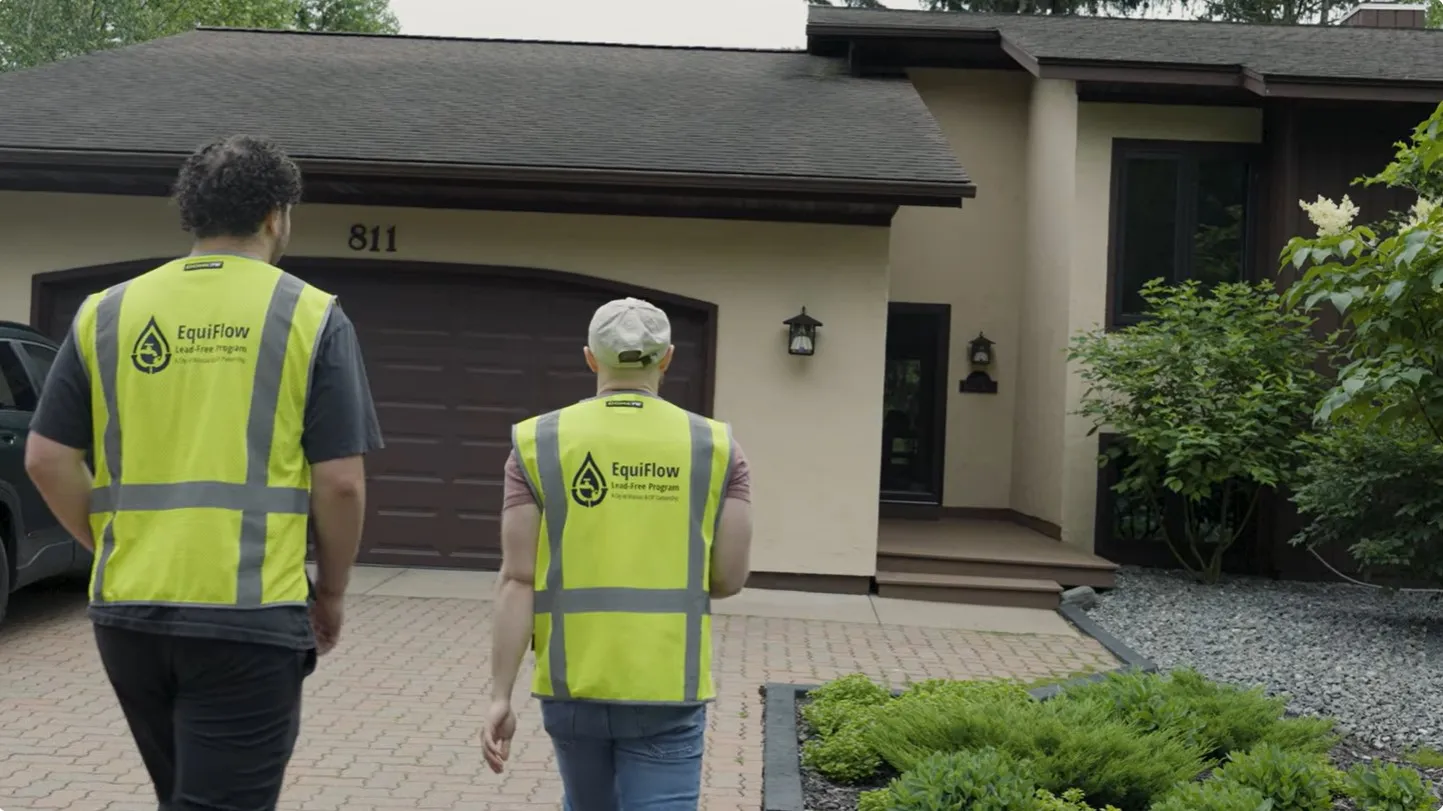
Our EquiFlow Wausau program verified the material of 4,700+ service lines and received 3,400+ signed Right of Entry forms in just 2 years.
Before any replacements happen, communities need to know what’s underground. CIP accelerates the first and often slowest part of LSL programs: verifying materials and establishing a complete inventory.

Our team deploys a blend of traditional field inspections and resident self-verification tools to drive faster and more cost-effective results. We pair this with direct community outreach using local partners who know and reflect the populations they serve.
For communities ready to remove lead pipes, CIP delivers end-to-end replacement programs that prioritize speed, scale, and trust.

Our model moves away from time-and-materials contracts and instead ties payment to actual pipes removed. We manage everything—contractor outreach, training, construction, permitting, and water testing—under one roof. And we ensure that local workers, especially from underrepresented groups, are at the heart of delivery.

Smart Tools for Smarter Program Management 

Infrastructure challenges are complex but managing them doesn’t have to be. CIP uses a program management platform that brings real-time transparency, coordination, and accountability to every project.
Real-Time Performance Dashboards
Track runoff reduction, system capacity, and infrastructure performance at a glance.
Centralized Construction & Permitting Oversight
Monitor status of green and grey infrastructure projects—site by site—in one place.
Role-Based Platform Access
Give engineers, contractors, and municipal staff the right tools and permissions.
Custom KPIs & Regulatory Reporting
Align data collection with local, state, and federal compliance requirements.
Seamless GIS & Field Tool Integration
Visualize assets and streamline inspections, maintenance, and data capture.
Cloud-Based, Secure, and Scalable
Built to grow with your program while ensuring data protection and reliability.

Learn More About Our Innovative LSL Programs